The relationship between a special needs parent and their child's school can feel like walking a tightrope. You need the school's cooperation — its teachers, staff, and administrators are with your child for hours every day. But you also need to push back when something isn't working. Doing both at the same time is a real skill, and it's one most parents have to learn on the fly.
This guide is for those moments when something is wrong and you need to address it — without burning bridges or losing momentum.
Start with curiosity, not accusations
Even when you're frustrated, opening a conversation with a question almost always works better than opening with a complaint. Compare these two approaches:
"My son came home upset again. What is going on in that classroom?"
"My son has seemed really distressed after school this week. I wanted to check in — have you noticed anything different going on for him during the day?"
Both express the same concern. But the second invites the teacher into a problem-solving conversation rather than putting them on the defensive. People who feel attacked tend to close down. People who feel like partners tend to open up.
Put things in writing
Phone calls and hallway conversations are easy for schools to forget, misremember, or simply not pass along. Email creates a record. Any time you raise a concern, discuss a change to your child's supports, or follow up on something that was promised, do it in writing — or follow up a verbal conversation with a brief email summarizing what was said.
You don't have to be formal about it. Something as simple as: "Just wanted to follow up on our conversation this morning — my understanding is that you'll be checking in with the aide about the recess situation and getting back to me by Friday. Let me know if I've got that wrong."
This protects you, but it also protects the teacher — everyone knows what was agreed to, and there's no confusion later. Schools generally respond better to parents who communicate clearly and consistently than to those who only reach out when things have escalated.
Know who to talk to — and when to go higher
Not every concern needs to go to the principal's office. A rough week in the classroom is a conversation with the teacher. A pattern that isn't being addressed after several conversations is a conversation with the special education coordinator or administrator. An IEP that isn't being followed is a formal matter that may involve the district.
Escalating too quickly can damage relationships unnecessarily. Waiting too long can cost your child months of support they needed. A good rule of thumb: give the classroom teacher one or two genuine attempts to resolve an issue before involving a supervisor — and document each attempt so you have a clear record if you do need to escalate.
Reference the IEP — it's a legal document
If your child has an IEP, the services and accommodations listed in it are not suggestions. They are legally required. If something in the IEP isn't happening — a pull-out service, an accommodation during testing, a specific aide arrangement — you can and should bring that up directly.
Framing it as a question first is still useful: "I noticed the speech sessions have only been happening once a week — the IEP calls for twice weekly. Can you help me understand what's going on?" This gives the school a chance to explain or correct the issue before it becomes adversarial.
If the issue continues after you've raised it, put your concern in writing and address it to the special education director. At that point, you're no longer just raising a concern — you're creating a paper trail that matters if formal dispute resolution ever becomes necessary.
Keep your own records
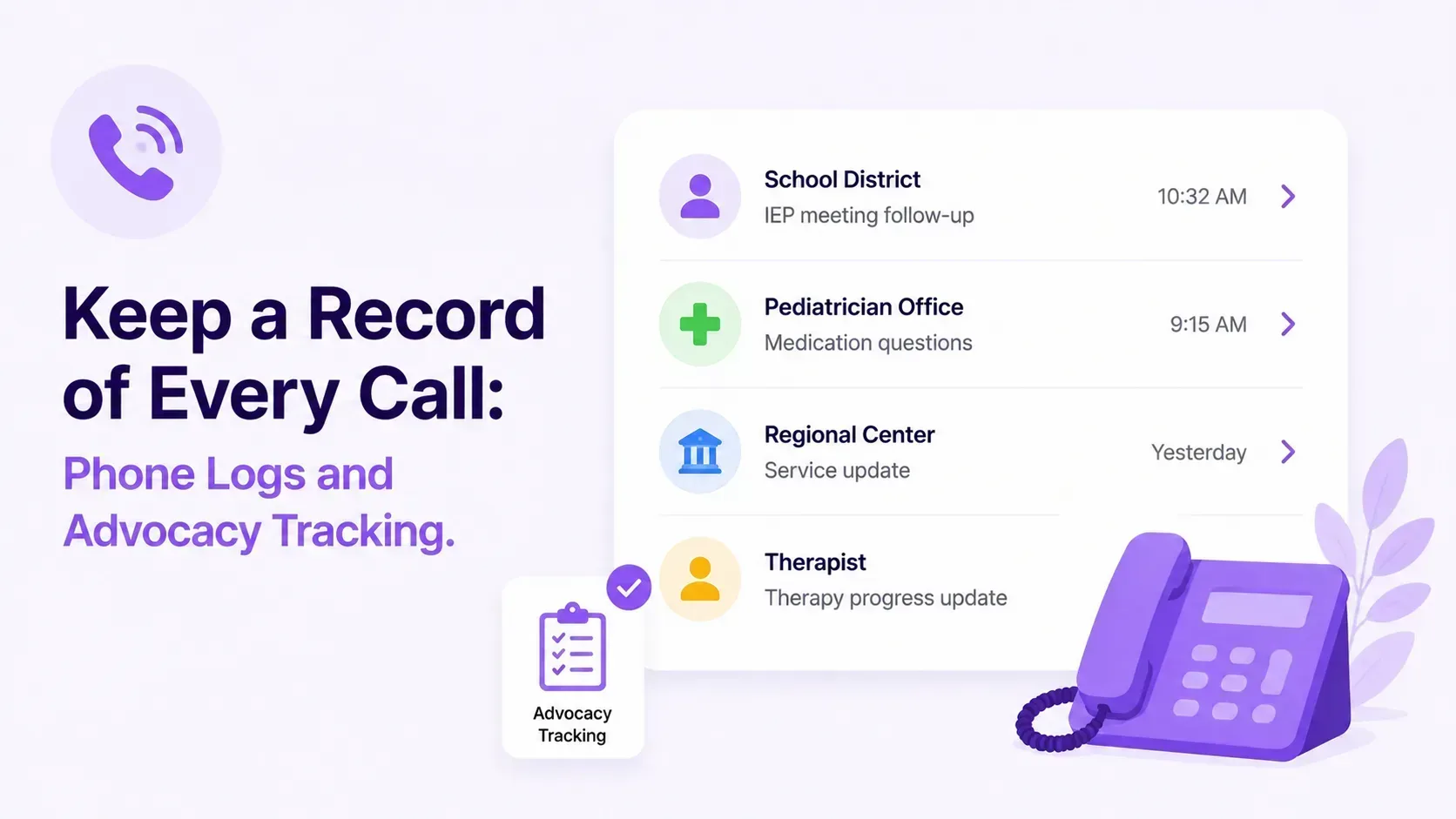
Schools keep records. You should too. Log every significant conversation — who you spoke with, what was said, what was agreed to, and when. Save emails. Note incidents that your child reports at home. Track whether services listed in the IEP are actually being delivered.
This isn't about building a legal case against the school. It's about having an accurate picture of what's actually happening so you can advocate from a position of clarity rather than frustration. When you walk into a meeting and can say "over the past six weeks, here's what I've documented," the conversation changes. You become someone the school takes seriously, because you clearly take this seriously.
Beetably is designed to make this kind of record-keeping simple — logging school communications, tracking IEP-related notes, and keeping everything searchable in one place so you're always prepared when it matters. You can also read more about how to prepare for IEP meetings specifically if that's coming up for you.
When the relationship breaks down
Sometimes, despite your best efforts, the relationship with a teacher or administrator becomes unworkable. When that happens, it's worth knowing your options: requesting a different classroom placement, asking for a meeting facilitated by a district coordinator, contacting your state's Parent Training and Information Center (PTI), or in serious cases, requesting formal mediation.
These options exist because the system recognizes that parents and schools don't always agree — and that children shouldn't pay the price for that disagreement. Using them isn't a failure. It's advocacy.
You don't have to be an expert to be effective
The most effective school advocates aren't necessarily the ones who know every regulation or can cite IDEA chapter and verse. They're the ones who show up consistently, communicate clearly, keep good records, and refuse to give up on their child.
You already have what it takes. The knowledge builds over time.