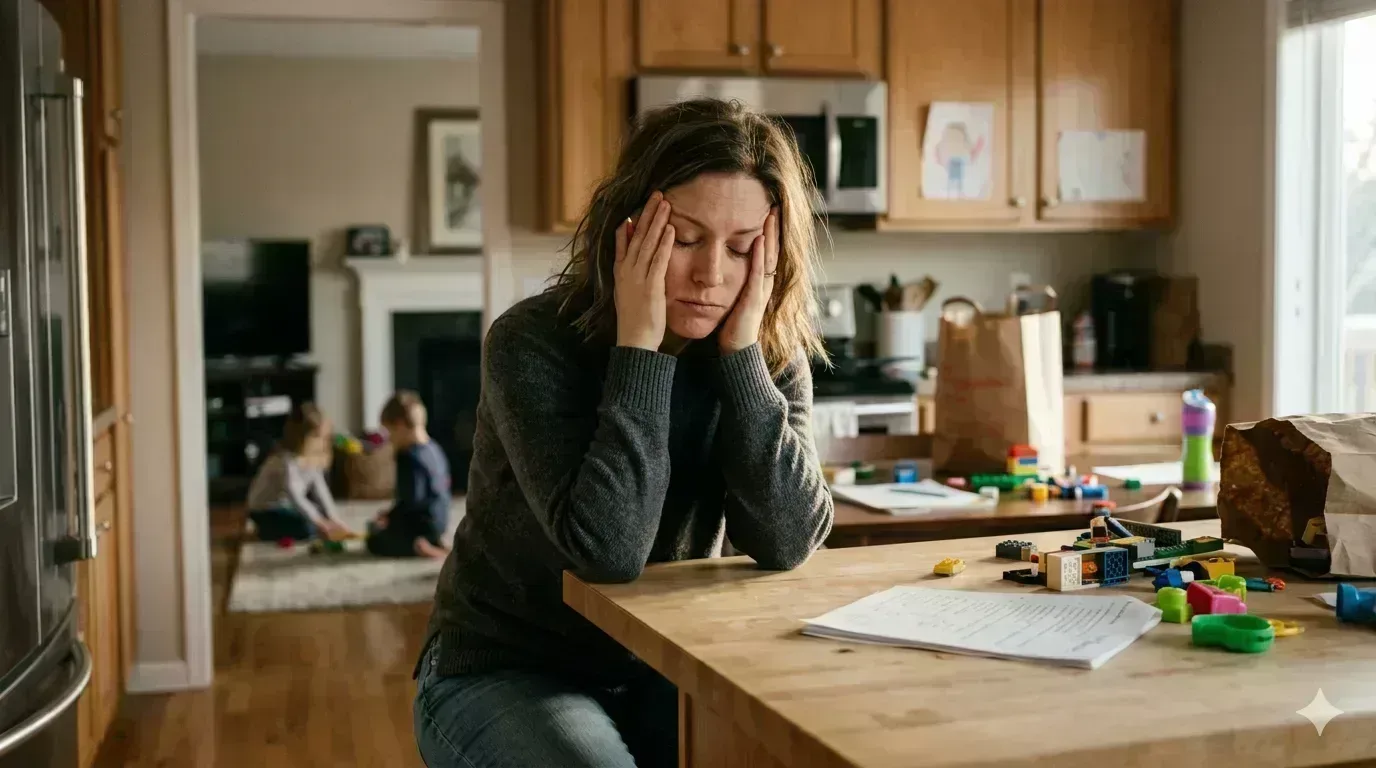
If you've spent months or years as the primary caregiver for a child with special needs, you already know what it feels like to run on empty. The appointments that stack up. The paperwork that never ends. The meetings, the phone calls, the constant advocating — and then coming home and still being the parent, the cook, the homework helper, and the emotional anchor for everyone in the house.
At some point, something has to give. And too often, it's you.
What caregiver burnout actually looks like
Burnout doesn't always announce itself. It tends to creep in gradually, and many caregivers dismiss the early signs as just being tired — because tired is the baseline. Here's what to watch for:
- Emotional exhaustion. You feel depleted even after rest. Small things feel overwhelming. You find yourself going through the motions without really being present.
- Withdrawal. You stop reaching out to friends and family because explaining everything feels like too much effort. Social situations that used to feel easy now feel draining.
- Resentment. Feelings of frustration or anger — toward your child, your situation, or the systems you have to navigate — that feel out of proportion, and that you may feel guilty about afterward.
- Physical symptoms. Burnout lives in the body too. Trouble sleeping, getting sick more often, persistent headaches or tension, and a general sense of not being well.
- Loss of satisfaction. Things that used to feel meaningful — a good therapy session, a small breakthrough with your child — stop feeling like enough. Nothing feels like progress.
If several of these sound familiar, you're not failing. You're burnt out. And that's a signal that something needs to change, not a character flaw.
Why caregivers of children with special needs are especially vulnerable
Every parent faces exhaustion. But caregivers of children with special needs carry a particular kind of weight that's worth naming.
There's the chronic uncertainty — not knowing what the future holds, whether services will continue, whether the progress you've worked so hard for will stick. There's the grief that many parents carry quietly: grieving the life they imagined for their child, and then feeling guilty for grieving at all. There's the isolation that comes from having a life that most of your friends and family can't fully understand. And there's the relentlessness of it — unlike other kinds of hard seasons, this one doesn't end.
None of this means caring for your child isn't also full of love, joy, and meaning. It means those things coexist with something genuinely hard, and acknowledging that isn't complaining — it's honesty.
What actually helps
There's no shortage of advice that tells caregivers to "take time for themselves" without any acknowledgment of how hard that is to actually do. So here are approaches that are realistic:
- Name what you're carrying. Burnout often lives in the background, unnamed. Saying "I am burnt out right now" — to yourself, to your partner, to a friend — is a surprisingly powerful first step. It shifts burnout from something you're silently drowning in to something you can address.
- Reduce the mental load wherever you can. A significant part of caregiver exhaustion isn't physical — it's the constant tracking of details in your head. Dates, appointments, what was said at the last meeting, what needs to follow up. Offloading that mental load onto a system — any system — frees up cognitive space that your mind desperately needs.
- Ask for specific help. "Let me know if you need anything" rarely results in actual help because the work of figuring out what to ask for is itself exhausting. Instead, get specific: "Can you take the kids Saturday morning?" or "Can you make dinner Thursday?" People who care about you want to help — make it easy for them.
- Find your people. Connecting with other caregivers who truly understand — through local support groups, online communities, or parent networks — provides something that friends and family often can't: the experience of being genuinely seen. You don't have to explain everything from the beginning.
- Take your own appointments seriously. Caregivers are statistically far more likely to skip their own medical and mental health appointments. Your health is not a luxury — it's part of how you stay in this for the long haul.
The guilt that gets in the way
One of the most common things caregivers say when they try to take time for themselves is that they feel guilty. Guilty for not doing more. Guilty for needing a break. Guilty for having hard feelings about a situation that involves their own child.
That guilt is understandable, but it's worth examining. The belief underneath it — that a good caregiver is one who gives without limit — is simply not true. Caregivers who are depleted make worse decisions, have less patience, and are less able to be emotionally present for their children. Taking care of yourself is not indulgent. It is part of taking care of your child.
Small steps count
You don't need a spa day or a week off (though if you can manage either, take them). What most caregivers need is a series of small, consistent reprieves — ten minutes outside alone, one evening a week that belongs to you, a single task removed from your mental plate.
Reducing administrative overwhelm is one place to start. Keeping your child's records, appointments, therapy notes, and incidents organized in one place — rather than scattered across texts, notebooks, and memory — means less time hunting for information and fewer moments of panic when you need something quickly. Tools like Beetably exist specifically to reduce that kind of invisible labor, so more of your energy can go where it matters most.
You've been carrying a lot. It's okay to set some of it down.
If you're looking for practical ways to stay organized and reduce the mental load of caregiving, our post on why documentation matters for parents is a good place to start.
