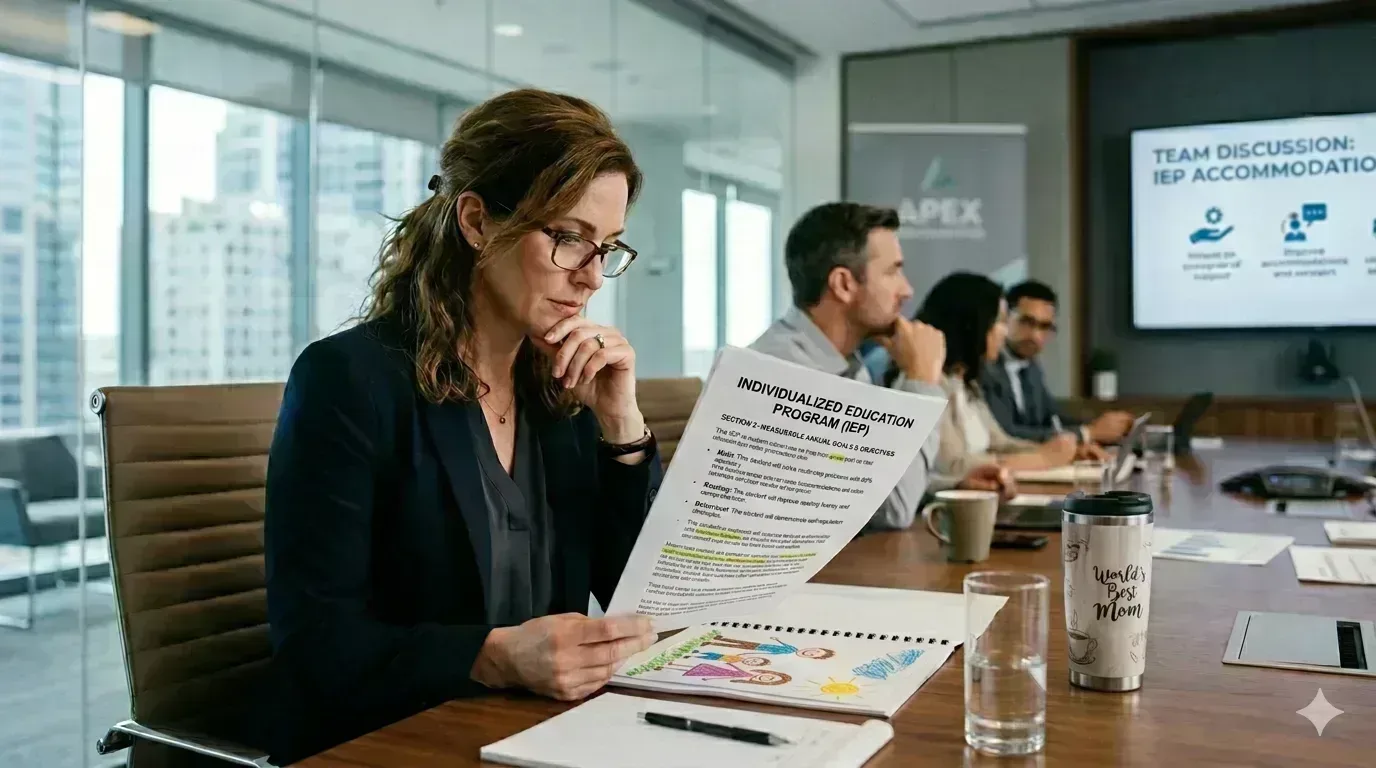
If you've ever walked out of an IEP meeting and immediately thought "wait, what did they actually agree to?" — you're not alone. IEP meetings move fast, involve a lot of people, and cover everything from present levels to annual goals to service hours. Without a clear system for capturing what was said and decided, it's easy for important details to fall through the cracks.
Here's how to approach IEP documentation so nothing gets lost — before, during, and after the meeting
Before the Meeting
Request the draft IEP in advance. Schools are generally required to share draft IEP documents before the meeting. Read it carefully and note any concerns. Write down specific questions — about goals, baselines, service hours, placement, and related services.
Review your previous meeting notes. What was promised last time? Were goals met? What actions were supposed to happen between meetings? Having this context makes you a much more effective advocate at the table.
List the attendees you expect. An IEP meeting requires specific members to be present (general ed teacher, special ed teacher, administrator, related service providers). Knowing who should be there helps you notice if someone is missing — which can affect whether the meeting is legally valid.
During the Meeting
Write down:
Don't worry about getting perfect prose. Bullet points and abbreviations are fine. You can clean up the notes afterward.
After the Meeting
Write up your notes within 24 hours. Memory fades quickly. Fill in anything you abbreviated or shorthand-noted while the meeting is still fresh.
Log the meeting in your documentation tool. This is where a tool like Beetably helps — you can log each IEP meeting as an event, record attendees and decisions made, and keep everything in one searchable place alongside your child's other records.
Send a follow-up email. A brief email to the case manager or special ed coordinator summarizing what was decided creates a paper trail. Something like: "Thanks for today's meeting. Just confirming that [child's name] will receive 60 minutes/week of speech therapy starting [date]. Please let me know if I have anything wrong."
Check the written IEP against your notes. When you receive the final IEP, compare it to what you wrote down during the meeting. Discrepancies do happen, and catching them early is much easier than disputing them months later.
What to Do When Things Go Wrong
If a service isn't being delivered as agreed, your documentation is your most important tool. Dates, names, agreed service hours, and what was actually provided — having this in writing makes the difference between a vague complaint and a specific, actionable request.
Many parents have successfully used detailed records to request compensatory services for missed sessions, dispute placement decisions, and ensure their child received every support they were entitled to.
The work of documentation isn't glamorous, but it's one of the most powerful things you can do as an advocate for your child.